
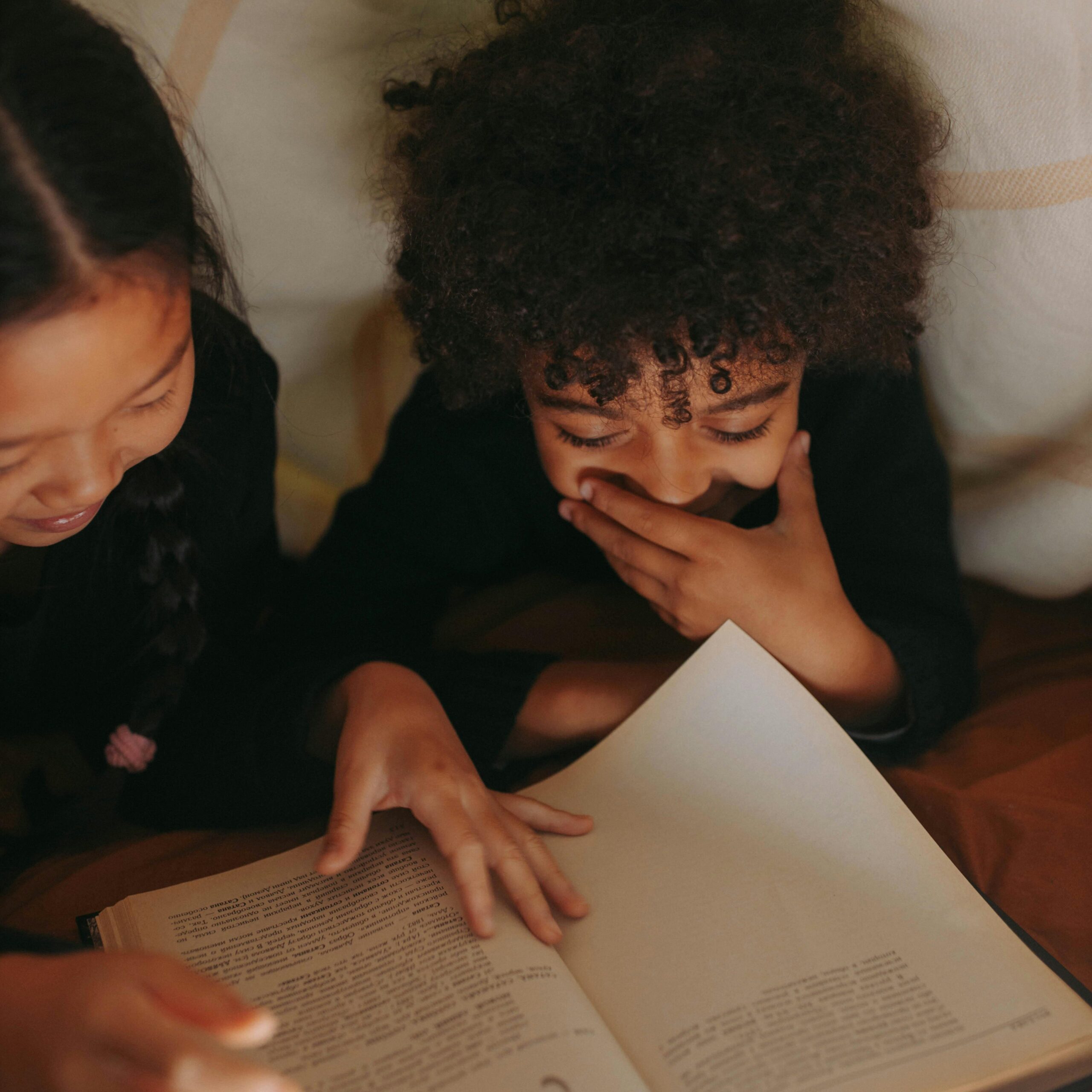
Why have stories endured through the ages? Stories have been around as long as history; oral or written. First, there are true stories, which are, obviously, history. These are passed down verbally from person to person or written down for future generations to read. I doubt that many people would debate the importance of history; to know what has happened in time past. However, there is another form of storytelling that has come up for debate of various kinds.
This debated story form is fiction, made up stories. What good are they? Are they not, in reality, detrimental? We see people who will spend hours, even days of their lives, lost in fiction. Then the debate will come up of how much is too much. There has also been the debate in the past of whether fiction is detrimental simply because it is made up, a falsehood, a lie. Yet, storytelling in a fictional form has existed for centuries, even millennia.
Clearly, despite the debate and despite the naysayers, fiction is a part of the human experience. Why is this? What is it about fiction that holds the attention of individuals and groups throughout the ages?
Consider this: A hunter returns to the village and describes a fanciful hunt where his courage, fortitude, and critical thinking skills are put to the test. A bard, among his tales of history, also speaks of legend; fanciful tales with daring deeds and acts of nobility. True, part of these legends cannot be historically accurate. It is also possible that some are not historically accurate at all. However, the audiences listen in rapt attention, marveling at the larger than life characters. They consider the traits of these characters; traits which shine through in extreme circumstances.
Of course, the listener will be very unlikely to experience these extreme circumstances, but the lessons about these admirable traits are presented in a nonjudgmental manner which allows the listener to take the lessons to heart. The listener might even strive to incorporate those traits of nobility into their own lives.
Let us bring this concept into our own age. We are unlikely to go on adventures where the freedom of our world lies in our hands figuratively and literally, as we are asked to set aside our quiet life in a sheltered land. Neither are we likely to face a specific malignant entity which will attempt to control our minds, bend us to its will, and cause us to allow or aid in the enslaving of the free world. No, we probably won’t face such extreme circumstances as did Frodo, but we will face peer pressure. Will we resist this malignant force? We might have to face a bully who will attempt to destroy interpersonal fellowships. Will we stand up to them?
We might never have to face down an, often, antagonistic wizard who hales from a house which turns out more dark witches and wizards than any other, but the concept still remains, even in our world. It is still possible that a Snape-like person might actually wind up fighting for you.
When we encounter that young witch that seems stuck-up, we can consider a little more carefully. She might be trying desperately to prove she belongs, because the world won’t accept her humble origins. There is also a real possibility that when she explains the correct way to perform a spell, she isn’t trying to sound superior. Rather she just might be trying to share knowledge because she doesn’t understand why anyone wouldn’t want as much knowledge as they can possibly get or why anyone wouldn’t want to do their very best. Isn’t it possible that such a person might actually be a good friend and a powerful ally when push comes to shove?
This is what stories of fiction do. They allow our minds to relax from the trials of the world so we can contemplate and absorb scenarios and concepts. Stories allow us time to analyze situations in which we will, hopefully, never find ourselves. They give us space to put ourselves in that position without truly having to be in that position. This way when a less drastic version of the situation arises, we are prepared.
When we listen to and come up with stories, what we are doing is creating a simulation. We are able to test out scenarios and consider the variables. How would we hope to react under certain circumstances, and how would different nuances change those reactions? How do we think we actually would react under those circumstances and nuances? Isn’t it wise to run simulations before getting into an actual situation? Again, we understand that some fiction deals with extreme situations. We probably aren’t going to face down trolls. If, however, you distill the story down to its core concepts you can find something that can apply to the real world.
Sometimes the real world can be very harsh, and fiction gives a sort of mini-vacation. You don’t have to spend a lot of money, though there are ways to do just that in the realm of fiction. All you really need is a story and your imagination. With these two tools you can find yourself transported to worlds that astound you, where the good guys actually win after a fierce struggle, and where nobility, bravery, and strength of character is something to be praised. We can see the possibility of a better world where, even in the darkest hours, there are those who are strong enough in themselves, even if they aren’t the strongest physically, to stand up for what is right and change the world for the better.
Isn’t this the kind of thinking we want to encourage?
The problem with fiction, isn’t with fiction itself. One problem occurs when people look at it as solely entertainment rather than as a powerful tool, a simulation, a source of inspiration. When people write stories that have no meaning other than entertainment, it is simply a reason to separate oneself from the real-world stories are supposed to help us navigate.
You can learn something from most stories because stories are a reflection of life to one degree or another, even if it is set on another world. If a story does not generally reflect life, it becomes too fanciful, and the reader will not be able to suspend reality in order to engage. Our minds have been shaped by our experiences in this world, after all.
Now that we know the two main purposes of stories, we should strive to write with those purposes in mind. As readers, we should consider that as well. Stories should leave us with something to take back into the real world with us and, hopefully, something that will change the world for the better even if the change is subtle. It is the reader’s job to find that treasure and bring it home to share. Do you feel there are some benefits of fiction which I have missed? Let me know in the comments.
Consider if these stories were to take up residence in the readers. One person learns that, like Alannon, they can put the good of others above their own. Another learns that, like Frodo, even if they feel small and insignificant, the smallest can still change the course of history. Another learns to view history the way The Doctor views it; as something of great importance which must be protected.
However, there is another lesson we must learn, just like Bolt did in the Disney and Pixar: we must not live our lives in fantasy, for there are many adventures to have out in the real world, and we don’t want to miss out on truly living life.
Let us consider all the ways stories have helped us and shaped our way of thinking. Now, let us set out on our own journeys of creating the next generation of stories which will spread the wonder.
If you enjoyed this post, please, share this site with others, and like this page. If you want to receive further posts directly to your email before they are posted on my site, subscribe. Feel free to leave a comment or make use of the Contact page.
Discover more from Gear and Pen Stories
Subscribe to get the latest posts sent to your email.